
This post contains affiliate links. As an Amazon Associate, Everbreck earns from qualifying purchases at no additional cost to you.
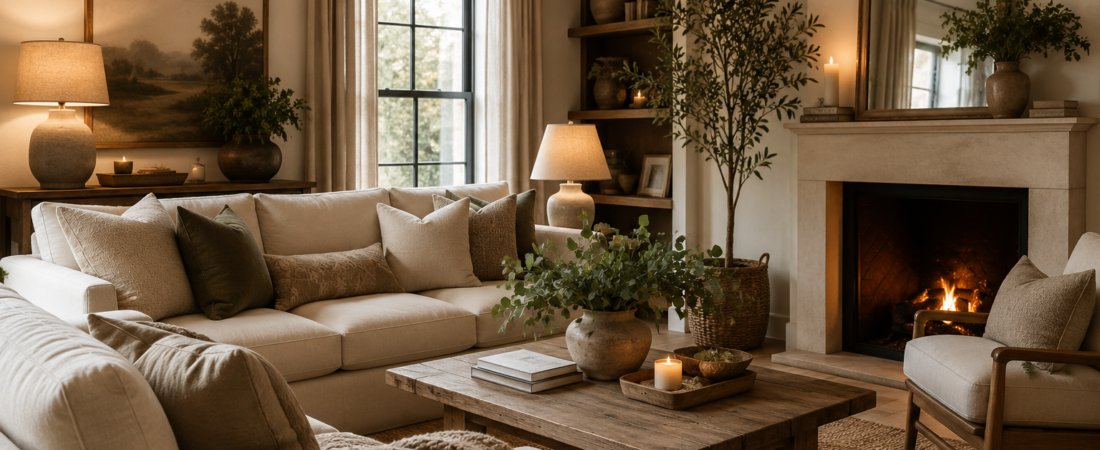
A warm and inviting home isn’t about following every design trend or filling your space with more things. Often, it’s the thoughtful details—soft lighting, layered textures, natural materials, and meaningful pieces—that make a home feel comfortable, welcoming, and beautifully put together.
Whether you’re refreshing one room or simply want your home to feel a little cozier, these seven simple ideas can make a noticeable difference.
1. Layer Your Lighting
Lighting has one of the biggest effects on how a room feels. Instead of relying on a single overhead light, layer several sources of light throughout the space. Table lamps, floor lamps, sconces, and even candles create a softer, warmer atmosphere and make a room feel more thoughtfully designed.
Choose warm-toned bulbs rather than cool, bright white lighting for a more comfortable and inviting glow.
2. Add Layers of Texture
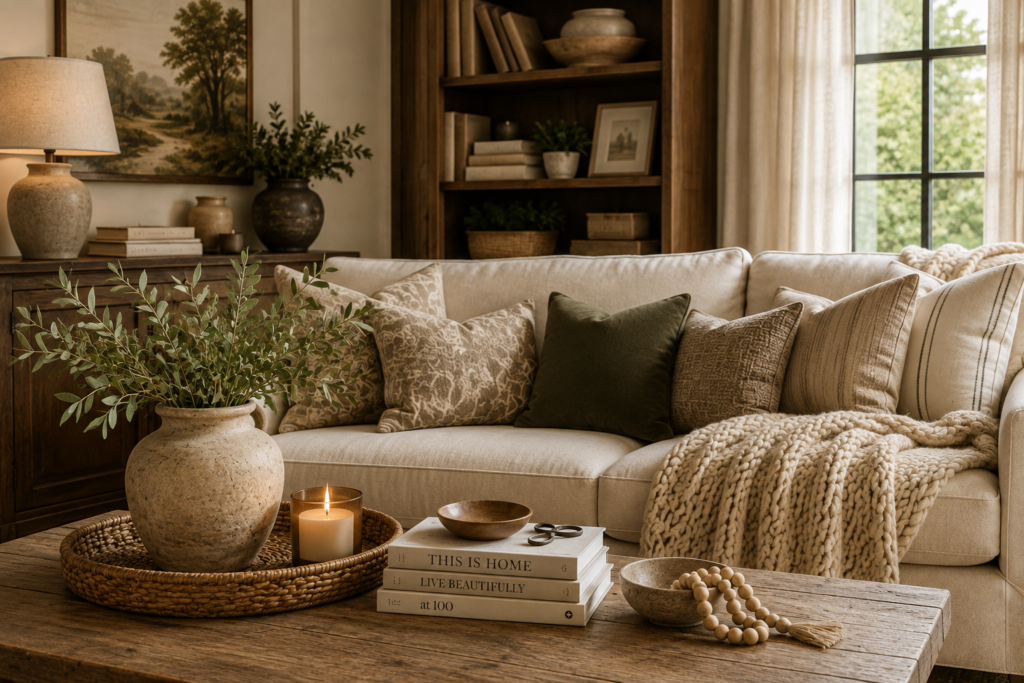
Texture is what keeps a neutral room from feeling flat or unfinished. Layer different materials throughout your space using linen curtains, woven baskets, cozy throws, textured pillows, natural wood, and soft rugs.
You don’t need to use everything at once. A few carefully chosen textures can add warmth and depth while still keeping the room feeling calm and timeless.
3. Bring in Natural Elements
Natural elements instantly make a home feel warmer and more relaxed. Try incorporating materials such as wood, stone, rattan, linen, or aged metals throughout your space.
Greenery is another simple way to bring life into a room. A vase filled with leafy branches, fresh flowers, or even a beautiful faux arrangement can soften a space and add an organic finishing touch.
4. Use a Warm, Cohesive Color Palette
A cohesive color palette helps a home feel calm, intentional, and inviting. Warm neutrals such as creamy whites, soft beige, taupe, camel, and muted earthy tones create an easy foundation that works beautifully from room to room.
You can still add color—just choose shades that complement the rest of your home. Muted greens, warm blues, soft browns, and other nature-inspired tones can add personality without overwhelming the space.
5. Make Your Seating Feel Comfortable and Welcoming
A beautiful room should also feel comfortable enough to actually live in. Arrange your furniture in a way that encourages conversation and makes it easy for people to settle in and relax.
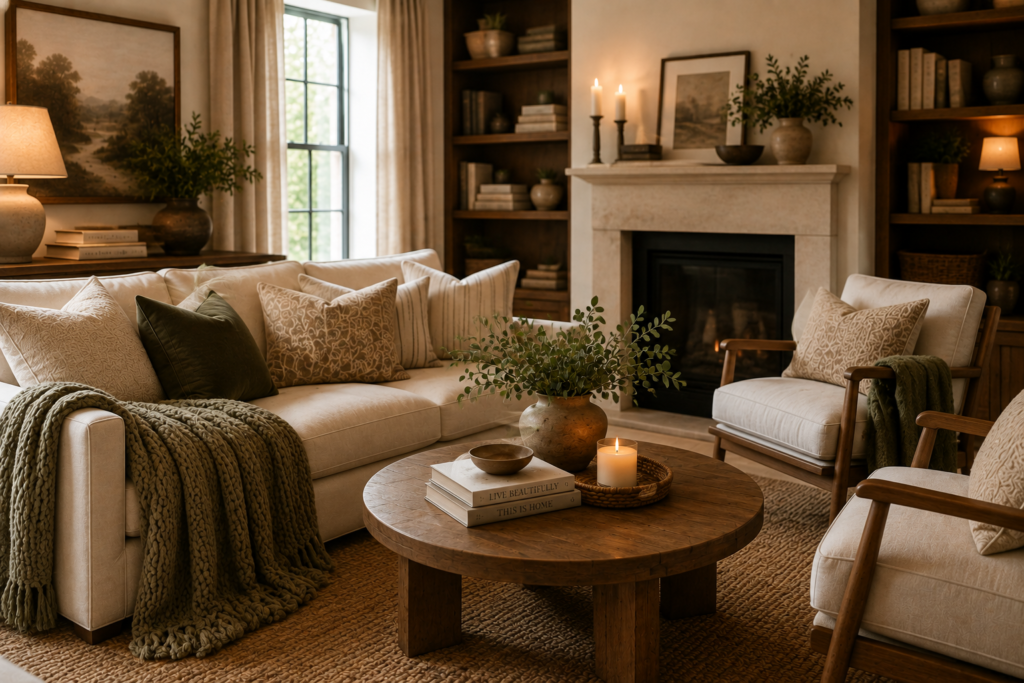
Add softness with comfortable pillows and a casually draped throw. These small details make sofas and chairs feel more inviting while giving the room that relaxed, collected look that makes a home feel lived-in rather than overly styled.
6. Decorate With Pieces That Feel Personal
The most inviting homes feel collected over time rather than decorated all at once. Incorporate pieces that have meaning to you—framed family photographs, favorite books, artwork, travel finds, vintage pieces, or objects with a story behind them.
Mix these personal touches with your everyday décor instead of filling every surface. Leaving a little breathing room allows the pieces you love to stand out and keeps your home feeling intentional rather than cluttered.
7. Create Small Moments of Warmth
Sometimes the smallest details are what make a home feel the most welcoming. A candle on the coffee table, a lamp glowing in the corner, fresh flowers on the kitchen counter, or a neatly styled stack of books can create little moments of warmth throughout your home.
Focus on how your home feels, not just how it looks. When each room includes a few thoughtful details that encourage you to slow down, relax, and enjoy the space, your entire home begins to feel more inviting.
Create a Home You Love
Creating a warm and inviting home doesn’t require a complete makeover. Start with the spaces you use most and make small, intentional changes that add comfort, warmth, and personality.
Layer the lighting, bring in natural textures, display pieces you genuinely love, and give your rooms time to evolve. The most beautiful homes aren’t necessarily the most perfect—they’re the ones that feel welcoming, personal, and truly lived in.